
Most of the sugar Canadian children eat does not come from the biscuit tin. It arrives quietly, through drinks, breakfast cereal, flavoured yogurt, granola bars and sauces — foods bought in good faith. That is useful news, because quiet sugar is far easier to reduce than the kind your child is attached to.
First, the framing
“Sugar addiction” is a strong phrase and the science behind it is genuinely debated. What is not debated is that sweet foods are engineered to be very easy to keep eating, and that children’s preferences are shaped by what is repeatedly available. That is a solvable problem, and it is solved by changing the environment rather than by asking a child to have more willpower than an adult would.
A ban makes a food more interesting. Every one of the ten below works by reducing exposure or improving the alternative, not by declaring war.
Ten that actually work
1. Start with drinks. This is the biggest single lever and the easiest one. Juice, flavoured milk, sports drinks and soda deliver sugar without any of the fullness that food brings. Water and plain milk at meals, juice as an occasional thing rather than a default.
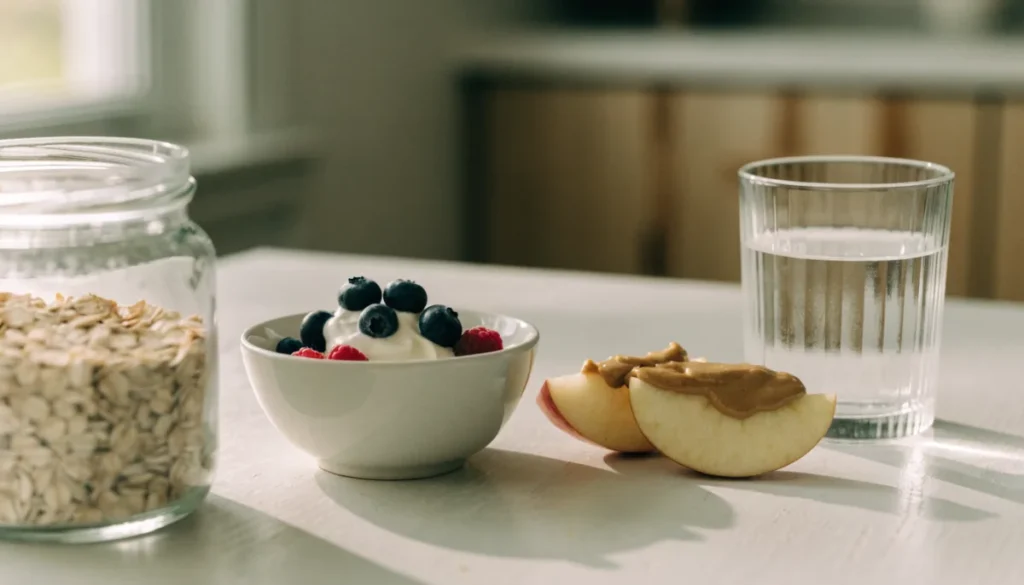
2. Fix breakfast first. A bowl of sweetened cereal can carry more sugar than a dessert. Plain oats, eggs, plain yogurt with fruit added by the child. Breakfast sets the palate for the whole day.
3. Buy plain and sweeten at the table. Plain yogurt plus fruit and a small drizzle of honey has a fraction of the sugar of the flavoured pot — and your child controls it, which they like.
4. Read the label in one place only. Ignore the front of the packet. Look at “Sugars” per serving on the Nutrition Facts table, and check whether the serving size resembles what your child actually eats.
5. Stop buying it in bulk. Whatever is in the cupboard gets eaten by somebody. Buying smaller and less often does more than any rule you announce.
6. Keep the fruit visible and the sweets not. A bowl of fruit on the counter and biscuits on a high shelf changes behaviour without a single conversation.
7. Give the snack a time. Grazing keeps the palate primed for sweetness and ruins appetite for meals. Two set snack times, water in between.
8. Do not use sweets as reward or punishment. “Finish your broccoli and you can have dessert” teaches that broccoli is the price and dessert is the prize. It raises the status of exactly the food you were trying to reduce.
9. Serve dessert with dinner sometimes. It sounds wrong and it defuses enormously. When the biscuit is on the table from the start, it stops being the thing worth rushing through dinner for.
10. Change one thing a week. Ten changes at once is a household revolt. One change, held for a week, becomes the new normal and you barely notice making the next.
What to expect
Taste adjusts. A child who has drunk water at meals for a month will find juice startlingly sweet. That is the whole mechanism — you are not asking them to give up enjoying sweet things, you are resetting what counts as sweet.
And keep the treats. A birthday cake is not a nutritional event, it is a birthday. The goal is that sweet food returns to being an occasion rather than a fixture.
Looking for what to put in its place? Our snack and treat recipes are built for exactly this — genuinely enjoyable, and not pretending to be a dessert substitute.