
Every parent has been handed the same advice: blend the cauliflower into the sauce. It works once. What a child takes from it, eventually, is that food from your kitchen might contain something they were not told about — and suspicion is much harder to undo than a refused carrot.
Why hiding backfires
The purpose is not to get vegetables into a child tonight. It is for them to be able to eat vegetables at nineteen, when you are not cooking. That only happens through familiarity: seeing, smelling, touching and eventually tasting the thing, repeatedly, with no consequence attached.
Hidden vegetables provide nutrition and zero familiarity. They also spend the trust you need for everything else.
Nine that work
1. Serve raw first. Many children accept raw vegetables long before cooked ones — crunchier, milder, and the texture is predictable. Carrot sticks, cucumber, peppers, sugar snap peas.
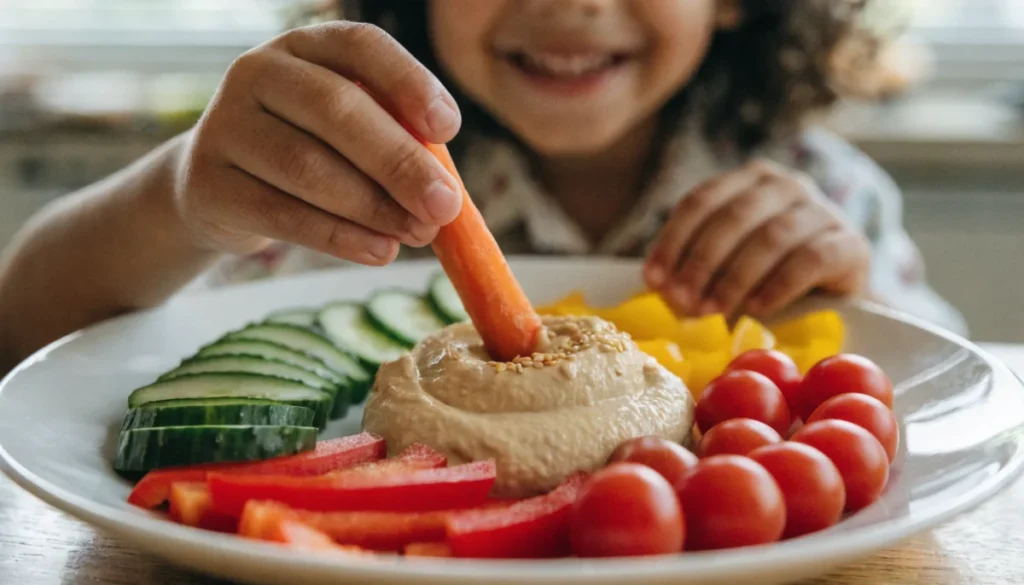
2. Add a dip. Hummus, yogurt, tzatziki, a bit of ranch. Dipping is a game, and the dip is not a compromise — it is how the vegetable becomes edible.
3. Put it out before dinner. A plate of vegetables on the table while you cook, when they are hungriest and not yet in a standoff about the meal. This is the highest-yield trick on the list.
4. Give them a job. Washing, tearing, arranging on the plate. A child who arranged the peppers is invested in the peppers.
5. Roast them. Roasting makes vegetables sweeter. Carrots, broccoli, squash and peppers at 200°C with a little oil and salt are a different food from their boiled version.
6. Let them choose at the shop. One vegetable each, their pick, no veto. Choice creates ownership even when the choice is between two things you were buying anyway.
7. Keep serving it after refusals. Research on food acceptance regularly finds it takes many exposures before a new food is accepted. Not many arguments — many appearances. Put it on the table, say nothing, remove it, repeat.
8. Eat them yourself, visibly and with enjoyment. Children copy what adults do far more reliably than they follow what adults say.
9. Make it colourful. A plate with three colours looks like more of an event than a plate with one. Rainbow arrangements are not childish — they genuinely raise how much gets eaten.
Three that backfire
“Three more bites.” Turns dinner into a negotiation, and negotiation teaches that vegetables are a chore worth resisting.
Dessert as payment. Raises the status of dessert and lowers the status of the vegetable, every single time.
Commenting on how much they ate. Praise and criticism both move attention onto the eating rather than the food. Serve it, and let them get on with it.
Give it a term, not a week
A child who eats two vegetables today and four in a year has done well. Nothing about this is fast, and nothing about it requires winning an argument at the table. Put them out, eat them yourself, keep the pressure at zero.
Our recipe library has snacks built around exactly this — rainbow plates, dips and things that get assembled by the child rather than served to them.