
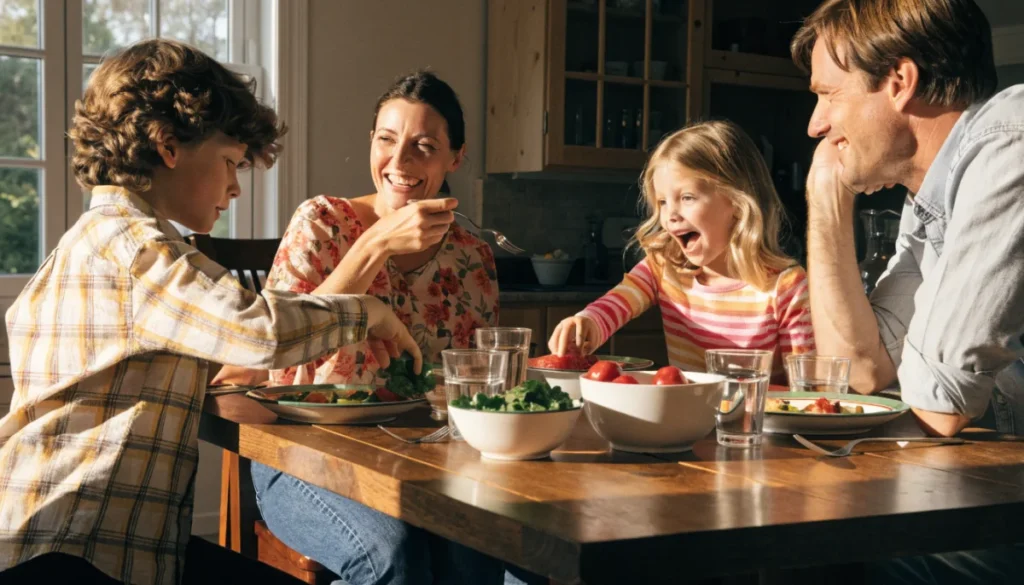
Most families arrive with a version of the same sentence: we know what we should be doing, we just cannot make it happen on a Tuesday. That gap — between knowing and doing — is the entire job.
What we do not do
No diets. No meal plan you are expected to follow. No calorie counting, no weighing, and no conversation about your child’s body or appearance. We talk about habits, energy and confidence, because those are what actually change and what children can control.
We also do not ask families to cook differently from how they cook. If your kitchen runs on rice and stew, we work with rice and stew.
How it actually goes
We start with the week you have. Not an ideal week. The real one — with hockey on Tuesday, a late shift on Thursday and a child who will eat four things. Advice that ignores that is advice nobody follows.
We change one thing. A single change, held for a fortnight, becomes normal. Ten changes at once becomes a household argument and then nothing. Which one comes first depends on the family: often it is drinks, or the 4pm snack, or bedtime.
We make the better option the easy one. Most of what looks like willpower is actually logistics. Fruit cut and at the front of the fridge. A vegetable plate out before dinner. A fifteen-minute session that does not need equipment. Children choose what is easiest at the moment they are hungry or bored.
We build on what they already like. Not a list of foods to introduce. The dish your child already eats, served slightly differently, with one new thing beside it that they are free to ignore.
We keep the pressure off. No “three more bites”, no dessert as payment, no commentary on how much was eaten. This is usually the hardest change to make and the one that shifts things fastest.
Treats, honestly
Treats stay. A childhood without birthday cake is not the goal and never was. What changes is that sweet food goes back to being an occasion instead of the default answer to hunger — usually by improving what is within reach rather than by banning what is not.
What it looks like after a few months
Usually not dramatic. A slightly wider list of accepted foods. Dinner that is less of a negotiation. A child who drinks water without being asked and moves most days without it being an event. Parents often say the biggest change is that mealtimes are calmer — which matters more than it sounds, because a calm table is what makes everything else possible.
Free either way
Our recipe library and fifty kids workouts are free and always will be. Plenty of families use those alone and never speak to us, which is a perfectly good outcome.
If you would like it applied to your own household, answer seven quick questions and we will point you to the right starting place. Online across Canada, in person in Ottawa.